
At some point in your early to mid-40s, you may find yourself holding a menu, a phone, or a prescription bottle a little farther from your face to read the small print. The words that were sharp last year now blur unless you push them out to arm’s length. It’s likely you are experiencing presbyopia, a change that eventually reaches every set of eyes on the planet if they live long enough.
Keep reading to learn more about presbyopia, what causes it, and what you can do to mitigate the symptoms.
What is Presbyopia?

Presbyopia is the gradual loss of your eye’s ability to focus on close objects.
Inside your eye sits a clear, flexible structure called the crystalline lens, which changes shape to bring near and far objects into focus. When you look at something close, tiny muscles squeeze the lens into a rounder shape so light lands precisely on your retina. Presbyopia sets in when that lens stiffens and can no longer flex the way it once did, causing blurry near vision. Presbyopia is strictly about the aging of the lens and its focusing power, which is why someone who has enjoyed perfect vision their entire life can still find themselves reaching for readers at 45.
Why Does Presbyopia Happen to Everyone?
Your crystalline lens never stops growing, laying down new layers over the old ones. Over the decades the proteins inside it cross-link and harden, and that added density leaves the lens too stiff to change shape the way it once did. By your mid-40s the lens simply cannot round itself enough to focus on close-up detail, and the effect only continues as the years pass. This is what separates presbyopia from other vision problems.
Nearsightedness, farsightedness, and astigmatism are refractive errors that some people have, and others never do. Presbyopia is a universal part of aging, arriving whether you have worn glasses your whole life or never needed them at all.
Even people who had LASIK years earlier to correct distance vision will still develop presbyopia, because the surgery reshaped the cornea and never touched the lens that stiffens with age.
Signs You’re Developing Presbyopia
Watch for these common signs:
- Holding Things at Arm’s Length: The most recognizable clue is the instinct to push a book, phone, or menu farther from your face, since a little extra distance briefly makes small print easier to focus on.
- Eyes That Tire Quickly During Close Work: Reading, sewing, needlework, or detailed hobbies start to feel like effort, and you may need to stop and rest your eyes more often than you used to.
- Headaches After Focusing Up Close: A nagging ache around the eyes or brow after reading or scrolling is a classic sign your eyes are straining to hold near focus.
- More Trouble in Dim Light: Your pupils widen in low light, which shrinks the range of distances your eyes can hold in focus, so reading a menu in a candlelit restaurant is noticeably harder than reading the same menu in daylight.
- Reaching for Brighter Lighting: If you find yourself turning on every lamp before you sit down with a book, presbyopia is often the reason.
These symptoms usually begin around age 40 and steadily progress until the lens has fully lost its flexibility, typically in the mid-60s.
How Is Presbyopia Corrected?
There is no way to reverse the stiffening of the lens, but you have more options than ever to work around it. They fall into two broad groups: aids that supply the missing focus from outside the eye, and procedures that address the problem at its source.
Prescription Eye Drops
For some patients, prescription eye drops may provide another option for improving near vision. These drops work by temporarily making the pupil smaller, increasing the eye’s depth of focus and helping with reading or other close-up tasks. These drops are designed for adults with presbyopia and may reduce the need for reading glasses for several hours after use. While these medications can be effective for many people, they are not a cure for presbyopia and are not the best choice for everyone. A comprehensive eye examination is the best way to determine the most appropriate solution for your individual needs.
Glasses and Contact Lenses

The simplest fix is a pair of reading glasses, which adds the focusing power your lens can no longer supply on its own.
Over-the-counter readers work for many people in the early years, while others do better with prescription progressive lenses that blend distance and near vision in a single pair.
Contact lenses designed for presbyopia, including multifocal designs and a technique called monovision, give another option for people who would rather skip glasses.
All of these approaches manage the symptom without changing the lens itself, so prescriptions tend to strengthen every couple of years as presbyopia advances.
Surgical Options
For those who want to reduce or eliminate their dependence on readers, several surgical options are available.
Near vision correction covers the range of procedures aimed specifically at restoring close-up focus. One of the most effective is custom lens replacement, in which the aging natural lens is removed and replaced with an artificial lens chosen to provide clear vision at multiple distances. Because that natural lens is the same structure that would eventually cloud into a cataract, replacing it now also removes the possibility of needing cataract surgery later in life.
Lens replacement relies on advanced lens implants engineered to correct presbyopia along with other vision errors, and the technology has grown remarkably precise. The Light Adjustable Lens even allows your surgeon to fine-tune the implanted lens after it has healed in place, using light treatments to dial in your vision before the final result is locked.
The right choice depends on your eyes, your daily habits, and your goals, which is something a specialist can help you sort through.
When to See an Eye Doctor
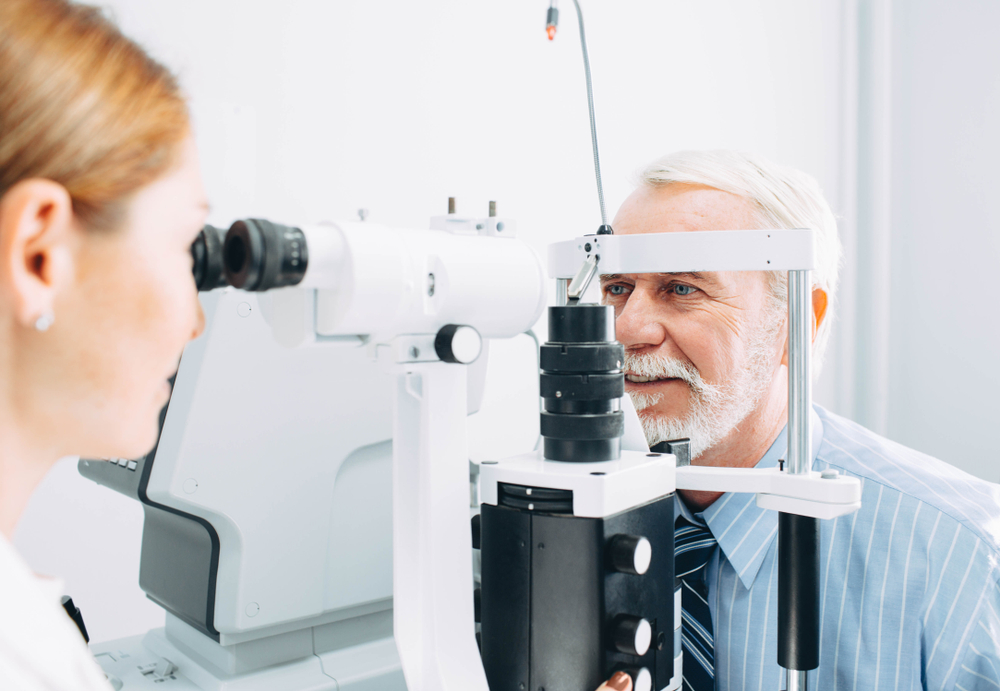
If small print is starting to slip out of focus, that is a good sign to schedule an eye appointment rather than simply buying a stronger pair of readers. The years when presbyopia appears overlap with the onset of other age-related changes, including glaucoma and early cataracts, and many of these develop quietly without obvious symptoms.
A comprehensive eye exam does more than update your prescription. It gives an ophthalmologist the chance to check the overall health of your eyes and catch problems while they are still easy to manage.
Presbyopia is one of the most predictable events in the human body, and living with it no longer means resigning yourself to a lifetime of reading glasses. The experienced surgeons at Williamson Eye Center can walk you through every option and help you find the approach that fits your life.
Noticing you’re holding your phone farther away to read? Schedule an appointment at Williamson Eye Center in Baton Rouge, LA.